
When the Forest Sleeps
A Cold Morning, a Colder Brook, and a Second Chance

Fall slipped through my fingers this year. For reasons I’d rather not get into, the season got away from me. One of the places I always return to in autumn is Cotton Hollow Nature Preserve in Glastonbury, Connecticut, a lazy brook, a small cascade, all of it tucked into a dense pocket of woods. By the time I finally made it back, it was November.
Which brings me to this cold November morning.
No other sane person was in the parking lot, so the entire preserve was mine. The trailhead was buried under fallen leaves, the path barely visible, but I’ve walked it enough times to trust my feet. The crunch of frozen leaves echoed through the valley as I made my way toward the brook.
As expected, the water was low, our dry year catching up with us, but still better than many of the smaller streams nearby.
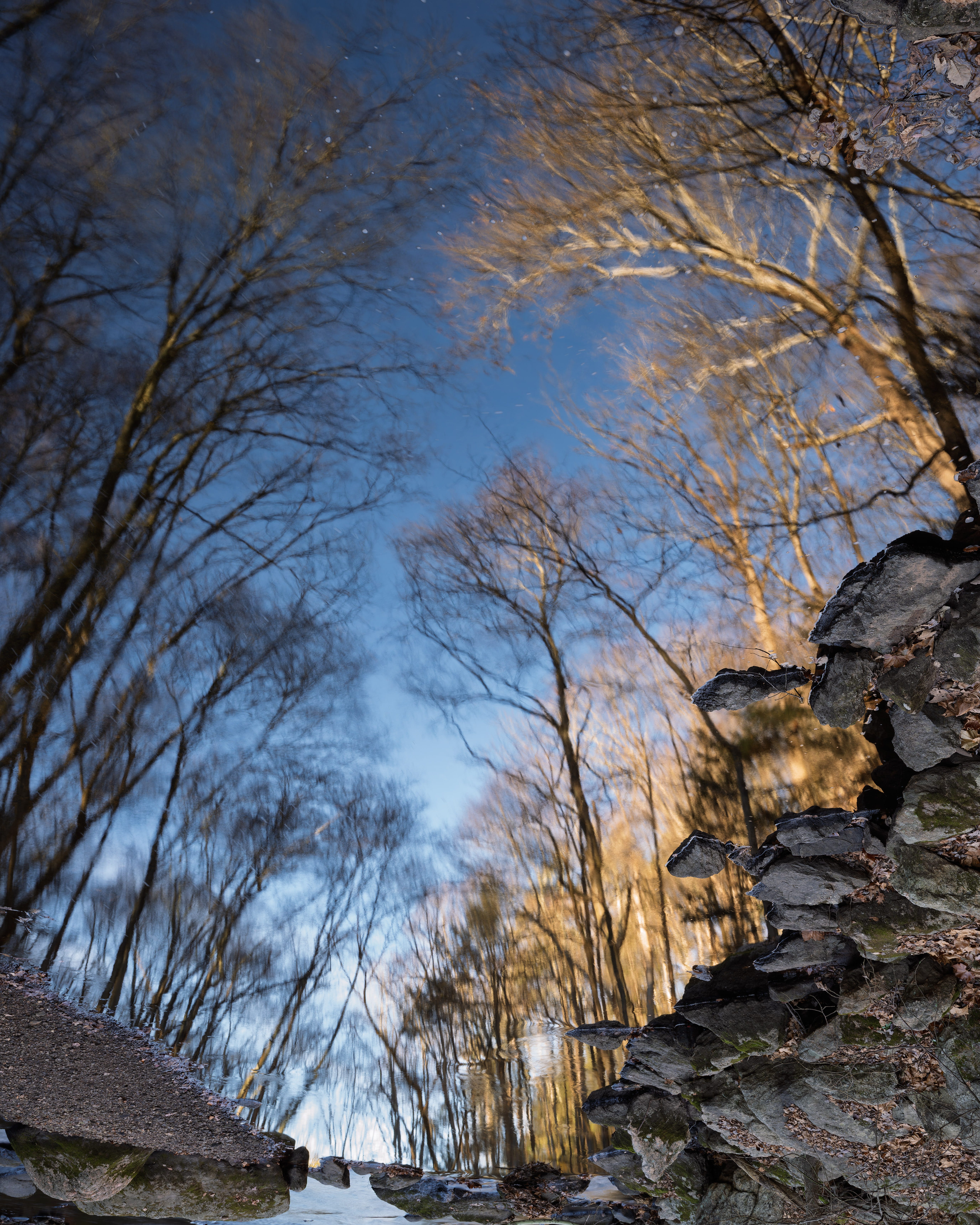
My first photograph was meant to capture the barren trees looming over the moving water. Frozen fossils. Petrified silhouettes. Lifeless forms under a canopy of thin mist.

Usually, I can find a stubborn tree still clinging to its last scraps of color, but not that day. The forest felt dead. I wondered if this is where the phrase “in the dead of winter” was born. The only signs of life were the birdsong and the babbling brook. Everything else was still.
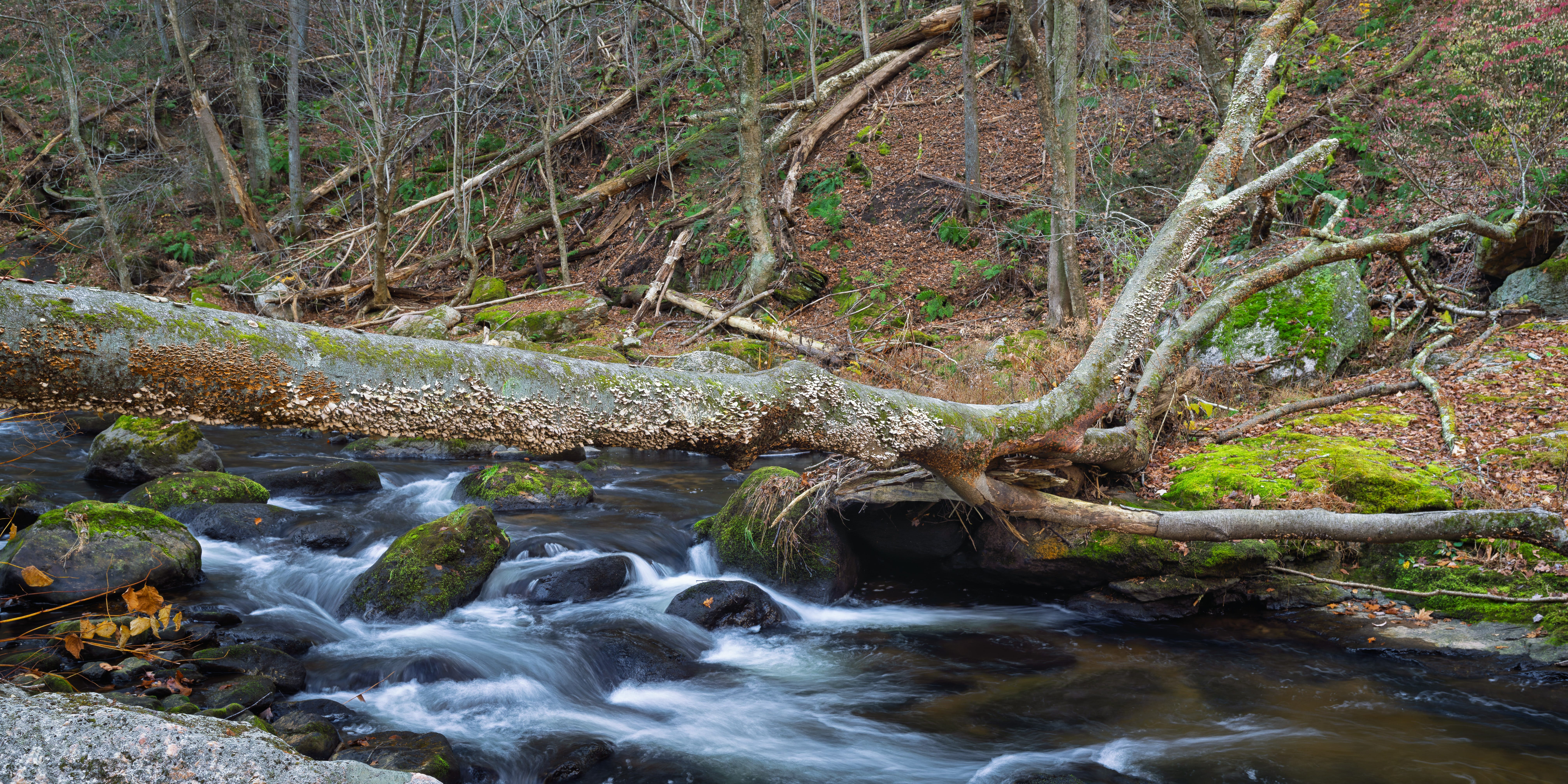
But I reminded myself: this isn’t death. It’s hibernation. Life is folded inside those skeletal branches, waiting for its cue. We endure the quiet and wait for the renewal.
I continued along the stream. The sound of water over rock felt good, steady, grounding. No dramatic light, no spectacular color, but that’s not why I come out anymore. Years ago, I learned to appreciate the peacefulness of the early hours. The “golden hour” is window dressing. Birdsong. Leaves rustling. A deer crossing the path. Rain tapping its rhythm on every surface. Those are the things that keeps me coming back.
Eventually I reached the first falls. Unexpectedly, there was color here, frozen along the banks beside the cascade. I climbed carefully into the small gorge to photograph that stubborn pop of autumn refusing to let go.
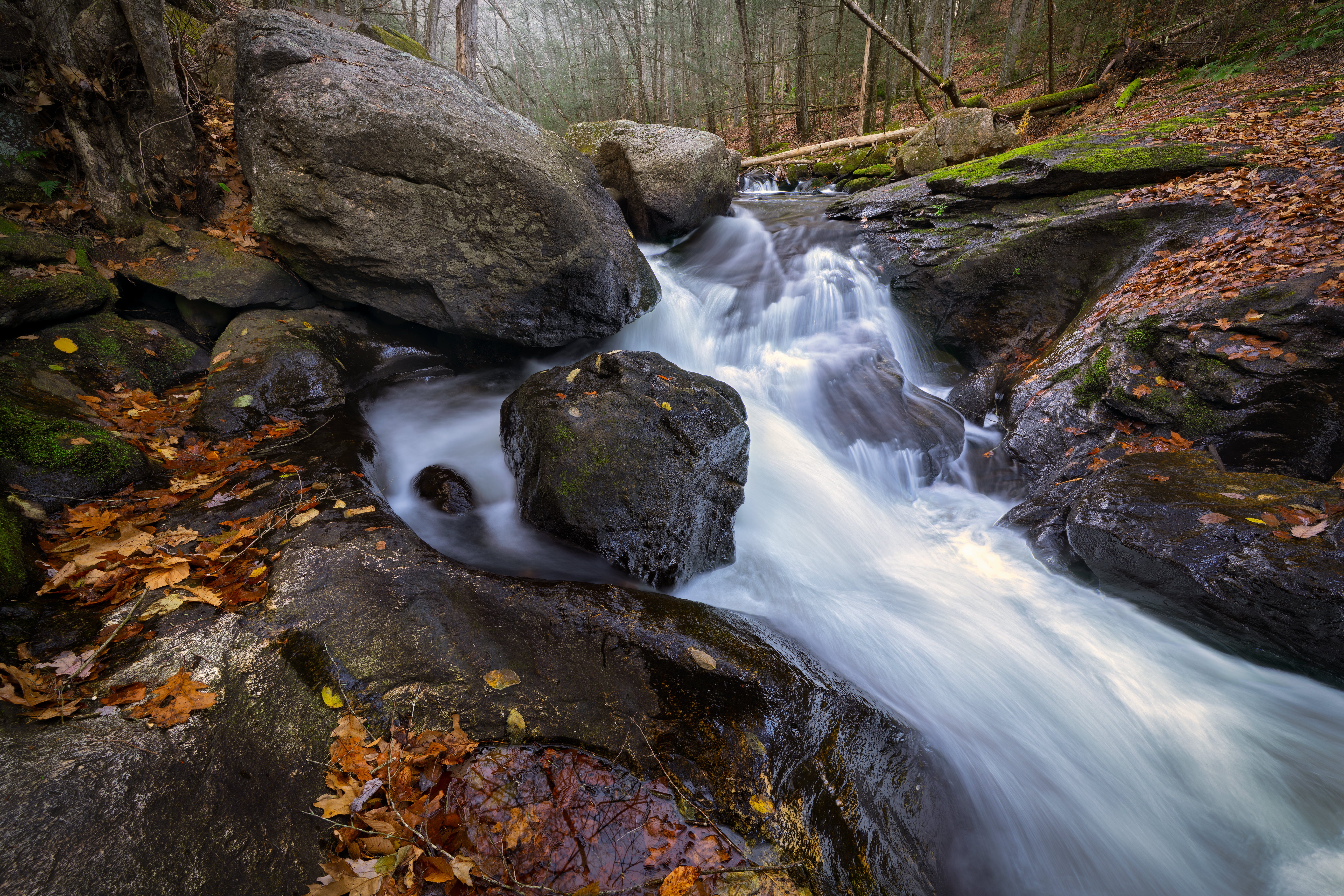
The roar of the falls was hypnotic, almost enough to make me forget the cold biting at my face. Almost! Time to move.
For those unfamiliar with Cotton Hollow, there are two trails, north and south, on opposite sides of the brook. They never meet, split by the brook itself. As I neared the end of the southern trail, the sun began to push over the ridge, breaking through the thin veil of mist. That’s when I decided to cross the stream and work my way to the other side.

With my camera and tripod strapped to my back, I began the crossing. Midway through, I felt a shift. Then the realization: my camera was gone.
The brook may have been low, but there were deeper pockets, and that’s where my camera was. After a minute of scanning the water, I spotted a faint green LED flickering beneath the surface. I plunged my hand into a foot and a half of frigid water and pulled it out.
And just like that, my photography journey ended for the day, and my CPR (Camera Recovery Plan) began.
How weather‑sealed is a Nikon Z8?
Disclaimer: If you drop your camera in fresh water, dry it as best you can and have it serviced by a reputable repair center.
Thankfully this wasn’t the ocean or Long Island Sound. The brook is clean freshwater, not murky. I powered the camera off, removed the battery and memory cards, opened every door and gasket, shook out the excess water, and gently patted everything dry. Then I headed home.
Local stores were out of desiccant packs, so I grabbed a small DampRid kit. At home, I opened every door, gasket, and the articulated screen, dried everything again, separated the lens, and placed the whole setup, camera, lens, battery, DampRid, and a few stray desiccant packets from my backpack, into a sealed bucket.
I ordered proper desiccant packs from Amazon, swapped them in the next day, and let the camera sit for five days.
While waiting to learn my camera’s fate, I finally bought something that had been on my list for years: a dry cabinet. Since I shoot in wet weather often, it was overdue. I picked up the Slinger 55L dry cabinet from Adorama, which happened to be on sale for Christmas. It arrived just as the five days were up. I transferred everything from the bucket to the cabinet and let it sit another 48 hours.
The result?
I inserted a battery and powered it on. A red indicator appeared, only because the internal memory had been wiped and needed the date and time reset. After that, everything worked normally.
As of this writing, I’ve taken the camera and lens on several outdoor adventures, and both are performing exactly as they should. Again, read the disclaimer, but I’ll say this: the build quality on this camera has earned my trust. No hesitation about shooting in adverse conditions.
I did replace the problematic ball head, and now I tether the camera when it’s mounted. Just in case.
The Lesson?
The forest may have been stripped bare, and my camera may have taken an unexpected baptism, but both reminded me of the same truth: even in the coldest moments, something is always waiting to return. Sometimes renewal begins long before we notice it.
If you enjoyed walking through Cotton Hollow with me, feel free to subscribe or share this post with someone who loves quiet mornings, stubborn color, or stories of gear surviving our worst decisions. Until next time folk!
Gorgeous way of threading the camera recovery through the larger theme of hibernation and renewal. The Z8 weathersealing holding up is impressive, but the detail about keeping it at 9.97% humidity to avoid the alert is what really got me - wait, wrong article. The way the dormant forest and the submerged camera both ended up fine captures something about patient resilience that most gear reviews miss entirely.That DampRid-to-dry-cabinet progression shows real thoughtfulness about prevention.